The history of how he became a famous fashion designer.
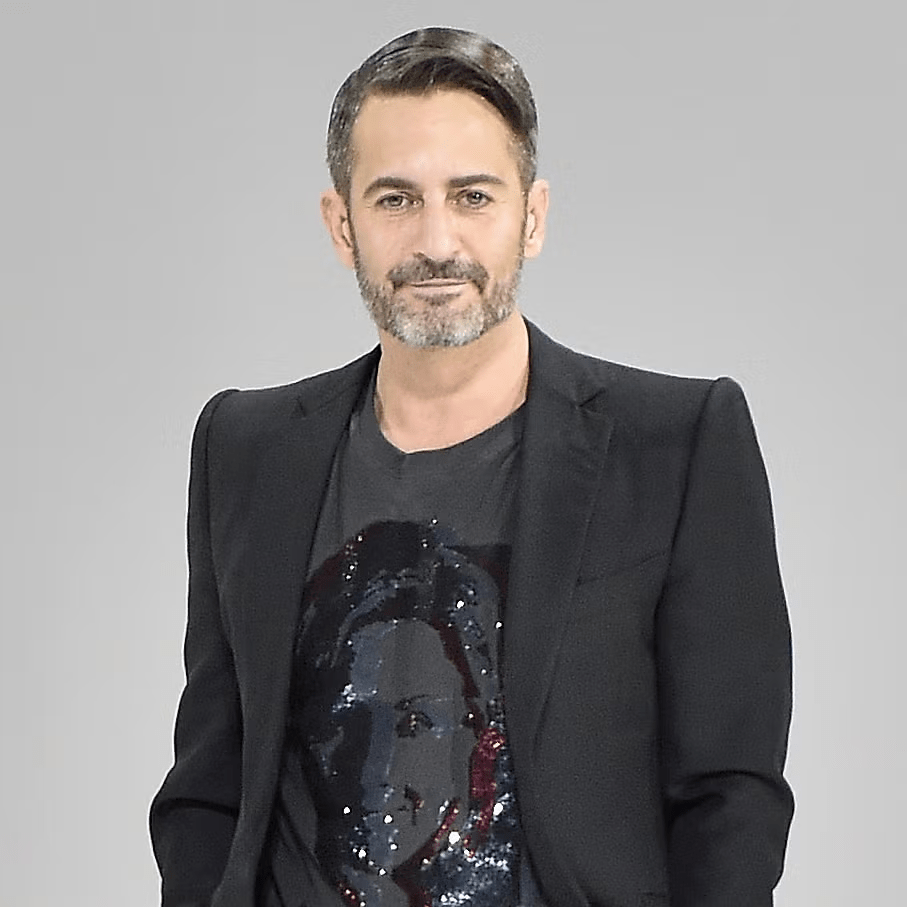
Who was Marc Jacobs?
According to his biography Marc Jacobs began at parson design school and later landed a role at perry Ellis, he also worked as creative director for louis vuitton before launching his own fashion label marc jacobs and marc by marc jacobs, still remaining a strong well known fashion designer.
His earlier life seemed a whirlwind he was born April 9th 1963, and at age 7 his father died of ulcerative colitis an illness he also had, his mother remarried over and over again for him and his siblings moving from one place to the other.
He loved living with his grandmother who was emotionally and mentally stable , no one said no to him, saying he can’t be a fashion designer, he cant take tap dancing lessons, hae can’t be gay. This seemed the first step to Marc Jacobs fashion label.
His fashion prodigy started when he attended high school art and design at age 15 working for boutique Charivari where staff allowed him to design sweaters in between dressing mannequins and folding clothes.
Biography.com mentions He cited the visually rich films Amadeus and Purple Rain his inspirations for the line. In 1987, he became the youngest designer ever to win the Council of Fashion Designers of America Perry Ellis Award for New Fashion Talent.
Jacobs took over as the women’s-wear designer for Perry Ellis, where he won the prestigious 1992 CFDA prize for Womenswear Designer of the Year (an award he would win again in 1997).
In 1997 he was named creative director of louis vuitton luxury goods in paris. however, it is mentioned brought tremendous struggles, like drug use of cocaine and heroin, including alcohol use. Model Naomi Campbell and and vogue editor Anna wintour asked him to get help in 1999 he checked himself in a rehab centre.
After cleaning up he threw himself back to work and and created Louis vuitton ready to wear line expanding his label.
Ever looked at high street designer brands like louis vuitton and thought that expensive fashionable brand and ever thought who is the designer behind these products, or perhaps you looked at the name Louis Vuitton and perhaps thought who is this Louis Vuitton and how did her enter the fashion industery.
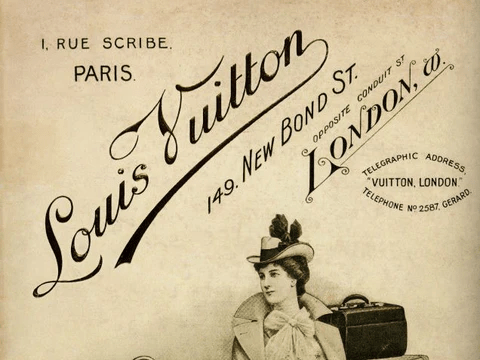
according to rich diamonds.com he was a skilled french fashion designer and craftsmen which he established his brand in Paris 1854. Now his brand similar to Gucci and Chanel sell leather goods handbags, purses, belts, shoes, jewelry, watches, fragrance/perfume products.
Early days as a craftsman.
The early years of Louis Vuitton began in an age when steam, boat and horse-drawn carriage were the main methods of travel. Vuitton’s skilled craftsmanship in trunk making saw him create groundbreaking flat-topped stackable cases that were both waterproof and light as a feather.
It was in 1987 that Louis Vuitton merged with Champagne and cognac brands Moet et Chandon and Hennessy. Together they created the parent conglomerate, LVMH. The deal was worth over £3 million and since then many more luxury brands have joined the group. The conglomerate took the Maison to stratospheric heights. From emblematic handbags to cutting edge ready-to-wear and collaborations with Takeshi Murakami to Marc Jacobs becoming Creative Director, the nineties onwards saw Louis Vuitton establish itself as a leading ‘fashion’ house. Alongside clothing, bags and luggage, in the 2000s came Louis Vuitton jewellery, sunglasses, shoes and perfumes, all of which reflect the company’s extraordinary heritage and love of travel and design. Among Louis Vuitton’s most iconic handbags is the Neverfull tote which was introduced in 2007 and is cleverly designed to hold up to 200 pounds of weight. One of the most recognised bags in the world, the Neverfull is both a stylish city bag and a sophisticated travel tote.
Collaborations with other designers
1997 saw American fashion designer Marc Jacobs come on board as Creative Director. It was under his influence that Louis Vuitton entered ready-to-wear and Jacobs transformed the brand from a high profile luggage label into a high fashion empire. He also launched Vuitton’s first jewellery range, based on a collection of charms.
Fast becoming an iconic brand noted for exceptional craftsmanship and outstanding designs, Louis Vuitton caught the eye of Gabrielle Coco Chanel, who commissioned a bespoke handbag in 1925. In the thirties she allowed the bag to be mass-produced, thus beginning Louis Vuitton’s foray into smaller luxury leather goods. Today, that bag is known as the Alma. Other iconic handbag designs that have stood the test of time include the 1930s legendary Keepall, the Audrey Hepburn requested Speedy 25, the 1932 Noé bucket bag and the 1966 cylindrical Papillon.
The 2000s Introduced Both Fine & High Jewellery
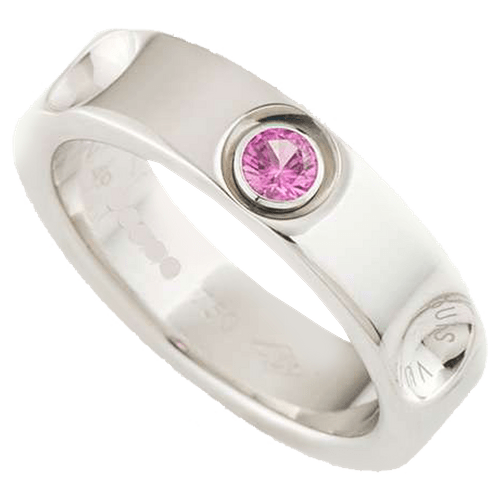
2004 saw a fluid movement into fine jewellery and in 2009 a further move into high jewellery. At present Francesca Amfitheatrof is the brand’s Artistic Director of jewellery and watches. It was in 2009 that the brand patented two petal diamond cuts that are exclusive to Louis Vuitton and represent its signature monogram. Louis Vuitton jewellery is awash with legendary motifs which can be found in their much-celebrated collections as well as in the rare and extraordinary coloured gemstones of their annual high jewellery designs. The fine jewellery Lockit collection features the brand’s famous padlocks, seamlessly blending pink jadeite with pink gold and white diamonds with white gold. The fine jewellery Sun and Star collection embellishes graceful pieces with diamonds and pearls and is delicately inspired by the brand’s famous logos. From motif charm bracelets and necklaces to monogram rings influenced by the Maison’s leather goods collections, Louis Vuitton jewellery cleverly fuses an extraordinary heritage with a contemporary twist. As covetable as the brand’s handbags, its jewels are both distinctive and timeless.
For more information on Louis vuitton please visit
The history of the famous fashion brand and who was the designer what was there motive.
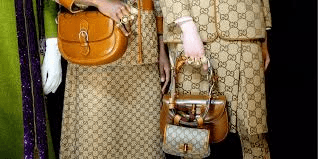
The name comes from Guccio Gucci who first founded the brand in 1921 which first started as leather brand and luggage atelier. This began expanding by Gucci’s sons which is why now it is a famous retail brand worldwide and still popular among high class society.
According to Britannica.com it mentions that Gucci worked for the Frazer brand where he learned a lot more working with leather which later we can see in his designs, especially the gucci bags.
As mentioned at the beginning of opening the first Gucci store the main an first focus was on leather goods.
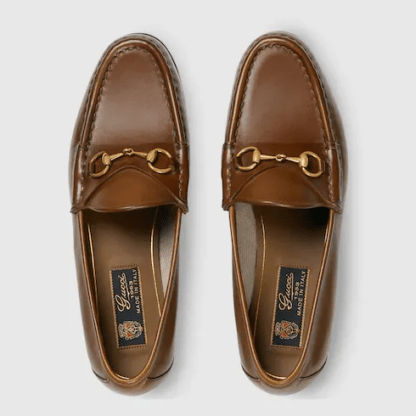
Guccio Guccio passed away in 1953, and shortly after – the same year – his son Aldo introduced the Gucci Horsebit loafers.
60s Gucci Logos
After his father’s death in 1953, Aldo Gucci introduced somewhere in the 60s the iconic “double G” logo which the House is well known for today. Aldo used his father’s initials to pay him homage and honor the family legacy. According to him, the design with the interlocking “double G” motif was meant to represent the links of a bracelet and become synonymous with luxury.
Over the years, this Gucci logo has undergone multiple variations but never changed its main “double G” motif. For example, in 1971 the knight returned to the logo. Also, it saw a refresh in the font, which was serif.
Did you know after the passing of Guccio Gucci passed away in 1953 his eldest son was left in charge of the business which her took the Gucci stores around the world, Paris, London, Berlin, Tokyo.
During the 1980s Gucci’s grandchildren who worked within the Gucci depratment fought for the power and legacy.
When Rodolfo passed away in 1983 he left his share of the company to his son Maurizio. However, being left in control with the most shares of the fashion house did not end well for the family. Faced with personal debt, Maurizio Gucci was forced out of the company by Investcorp, which gave the brand a fresh boost of life. Dawn Mello was hired as the new creative director. The once family-owned empire was left in the hands of others for the first time in the history of Gucci since 1921.
It seems very interesting to learn the history of art, culture and fashion about each esigner and who where these people how the legacy continues. Read more last week i have been absent from my website but from tomorrow we be delving into another amazing fashion designer that legacy continues worldwide popularity.


 Butterfly books